


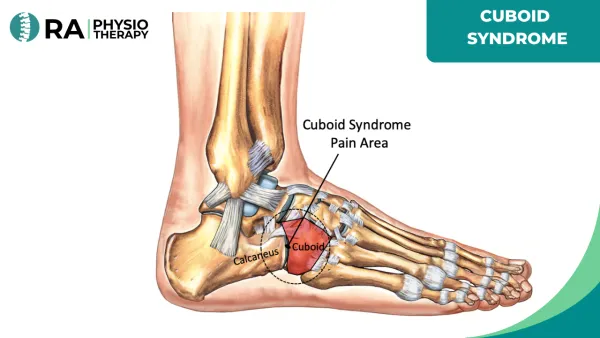
Cuboid Syndrome
Cuboid Syndrome Treatment & Physiotherapy for Foot PainCuboid syndrome is a condition caused by irritation, misalignment, or partial displacement of the cuboid bone in the foot. The cuboid bone is located on the outer side of the foot and plays an important role in foot stability and movement. Cuboid syndrome commonly causes pain on the outer side of the foot and may affect walking, standing, running, or sports activities. It often develops due to ankle sprains, overuse injuries, poor foot mechanics, or repetitive stress on the foot. Physiotherapy helps reduce pain, restore proper foot alignment, improve mobility, and strengthen the surrounding muscles.
Cuboid syndrome is a condition caused by irritation, misalignment, or partial displacement of the cuboid bone in the foot. The cuboid bone is located on the outer side of the foot and plays an important role in foot stability and movement. Cuboid syndrome commonly causes pain on the outer side of the foot and may affect walking, standing, running, or sports activities. It often develops due to ankle sprains, overuse injuries, poor foot mechanics, or repetitive stress on the foot. Physiotherapy helps reduce pain, restore proper foot alignment, improve mobility, and strengthen the surrounding muscles.
Common symptoms include:
- Pain on the outer side of the foot
- Difficulty walking or bearing weight
- Foot tenderness and discomfort
- Pain during running or jumping activities
- Weakness or instability in the foot
- Stiffness in the midfoot region
- Limping while walking
- Pain that increases during physical activity
- Reduced foot mobility
Cuboid syndrome may occur due to:
- Ankle sprains
- Repetitive stress on the foot
- Sports injuries
- Poor foot biomechanics
- Overuse during running or jumping
- Flat feet or abnormal foot posture
- Tight calf muscles
- Sudden twisting movements of the foot
- Improper footwear
Diagnosis includes physical examination and assessment of foot alignment and movement. Tests may include:
- Foot and ankle examination
- Gait analysis
- Range of motion assessment
- Palpation of the cuboid bone
- Functional movement assessment
- X-rays to rule out fractures
- MRI scan in selected cases
Physiotherapy helps improve foot mechanics, reduce pain, restore mobility, and improve functional movement.
- Ice therapy to reduce inflammation
- TENS therapy for pain relief
- Ultrasound therapy
- Soft tissue mobilization
- Taping techniques for foot support
Manual therapy and cuboid mobilization techniques help restore proper alignment and improve joint mobility.
Customized rehabilitation exercises help improve strength, flexibility, balance, and foot stability.
- Foot intrinsic muscle strengthening
- Ankle strengthening exercises
- Calf strengthening exercises
- Balance and stability exercises
- Calf stretches
- Foot mobility exercises
- Plantar fascia stretches
- Ankle flexibility exercises
Balance & Gait Training Balance training and gait correction exercises help improve walking patterns and reduce stress on the foot. Footwear & Activity Modification Patients are guided on proper footwear selection, activity modification, and foot support techniques to prevent recurrence.
- Experienced orthopedic physiotherapists
- Personalized rehabilitation programs
- One-on-one physiotherapy sessions
- Advanced manual therapy techniques
- Focus on pain relief and foot stability
- Evidence-based rehabilitation care
- Guidance for home exercises and injury prevention
If you are experiencing outer foot pain, difficulty walking, or foot instability due to cuboid syndrome, our physiotherapy team can help you recover safely and effectively. Book your physiotherapy consultation today for expert cuboid syndrome treatment and personalized physiotherapy care.
 Emergency No. : +91 93104 16308