


Disc Bulge
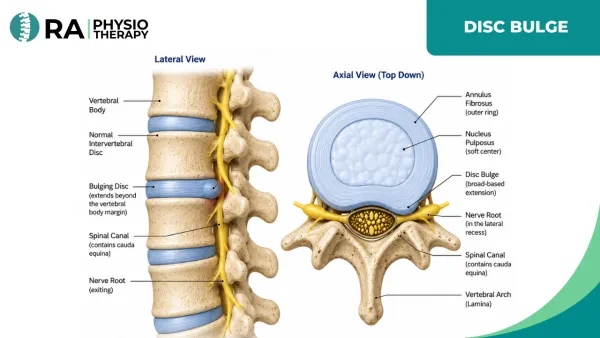
Disc Bulge Treatment & Physiotherapy for Back PainA disc bulge occurs when a spinal disc extends outward beyond its normal position due to pressure or weakening of the disc walls. Spinal discs act as cushions between the vertebrae and help absorb shock during movement. A bulging disc can place pressure on nearby nerves and cause pain, stiffness, numbness, or weakness. Disc bulges commonly occur in the neck and lower back and may develop gradually due to aging, poor posture, repetitive strain, or heavy lifting. Physiotherapy plays an important role in reducing pain, improving mobility, and strengthening the spine for long-term recovery.
A disc bulge occurs when a spinal disc extends outward beyond its normal position due to pressure or weakening of the disc walls. Spinal discs act as cushions between the vertebrae and help absorb shock during movement. A bulging disc can place pressure on nearby nerves and cause pain, stiffness, numbness, or weakness. Disc bulges commonly occur in the neck and lower back and may develop gradually due to aging, poor posture, repetitive strain, or heavy lifting. Physiotherapy plays an important role in reducing pain, improving mobility, and strengthening the spine for long-term recovery.
Common symptoms include:
- Lower back or neck pain
- Pain radiating to the arms or legs
- Muscle stiffness and tightness
- Numbness or tingling sensations
- Muscle weakness
- Burning or aching pain
- Difficulty sitting or standing for long periods
- Pain during bending or twisting movements
- Reduced spinal flexibility
A disc bulge may occur due to:
- Age-related disc degeneration
- Poor posture
- Heavy lifting
- Repetitive spinal strain
- Sudden twisting or bending movements
- Weak core and back muscles
- Sedentary lifestyle
- Obesity and excess body weight
- Sports injuries or accidents
Diagnosis includes physical examination and imaging tests to identify the affected spinal disc and nerve involvement. Tests may include:
- MRI scan
- X-rays
- CT scan
- Neurological examination
- Muscle strength assessment
- Spinal mobility assessment
Physiotherapy helps reduce pressure on the spine, relieve pain, improve posture, and strengthen supporting muscles.
- Ice therapy to reduce inflammation
- Heat therapy for muscle relaxation
- TENS therapy for pain relief
- Interferential therapy
- Ultrasound therapy
- Laser therapy for tissue healing
Manual therapy and spinal mobilization techniques help improve spinal movement, reduce stiffness, and relieve muscle tension.
Spinal traction therapy may help reduce pressure on spinal discs and irritated nerves.
Customized exercise programs help improve spinal stability, flexibility, and overall posture.
- Core strengthening exercises
- Lower back stabilization exercises
- Postural correction exercises
- Pelvic strengthening exercises
- Hamstring stretches
- Lower back stretches
- Neck mobility exercises
- Spinal flexibility exercises
- Hip mobility exercises
Patients are guided on proper posture, sitting positions, lifting techniques, and workplace ergonomics to reduce spinal stress. Balance & Functional Training Balance and functional movement exercises help improve body mechanics and support safe daily activities.
- Experienced spine physiotherapists
- Personalized rehabilitation programs
- Advanced pain relief therapies
- One-on-one physiotherapy sessions
- Focus on long-term recovery and prevention
- Evidence-based rehabilitation techniques
- Guidance for home exercises and posture correction
If you are experiencing back pain, neck pain, numbness, or radiating leg or arm pain due to a disc bulge, our physiotherapy team can help you recover safely and effectively. Book your physiotherapy consultation today for expert disc bulge treatment and personalized rehabilitation care.
 Emergency No. : +91 93104 16308