


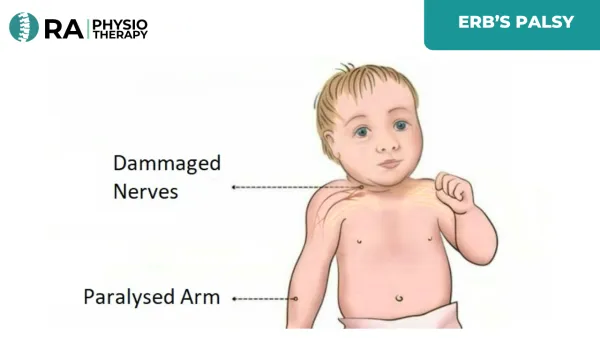
Erb’s Palsy
ERB’S PALSY TREATMENT & PHYSIOTHERAPY FOR BRACHIAL PLEXUS INJURYErb’s palsy, also known as Erb-Duchenne paralysis, is a condition that causes weakness or loss of movement in the arm due to injury of the upper brachial plexus nerves, mainly involving the C5 and C6 nerve roots (Erb’s point). It most commonly occurs during birth due to excessive traction between the baby’s head and shoulder, but it can also occur in adults due to trauma or injury. The condition affects key muscles of the shoulder and upper limb, including the deltoid, biceps, supraspinatus, infraspinatus, and brachialis, leading to significant functional limitation of the arm.
Erb’s palsy, also known as Erb-Duchenne paralysis, is a condition that causes weakness or loss of movement in the arm due to injury of the upper brachial plexus nerves, mainly involving the C5 and C6 nerve roots (Erb’s point). It most commonly occurs during birth due to excessive traction between the baby’s head and shoulder, but it can also occur in adults due to trauma or injury. The condition affects key muscles of the shoulder and upper limb, including the deltoid, biceps, supraspinatus, infraspinatus, and brachialis, leading to significant functional limitation of the arm.
Common symptoms include:
- Weakness or paralysis of one arm
- Loss of shoulder movement (abduction and external rotation)
- Loss of elbow flexion
- Reduced forearm supination
- Numbness or reduced sensation in the arm
- Arm hanging by the side
- Shoulder in internal rotation
- Elbow in extension
- Forearm pronated (“waiter’s tip” posture)
- Difficulty in wrist extension (in some cases)
Erb’s palsy occurs due to injury or stretching of the upper brachial plexus nerves. Common causes include:
- Difficult or traumatic childbirth
- Breech delivery
- Excessive traction on the baby’s head and shoulder
- Use of delivery instruments
- Large birth weight baby
- Falls or physical trauma
- Motor vehicle accidents
- Sports injuries
- Tumors or direct nerve injury
Upper Erb’s Palsy (C5–C6 Injury)
- Most common type
- Affects shoulder and elbow movement
- Typical “waiter’s tip” deformity
Extended Erb’s Palsy (C5–C7 involvement)
- More severe condition
- May include wrist and finger weakness
- Greater functional impairment
- Physical and neurological examination
- Assessment of muscle strength and reflexes
- Electromyography (EMG)
- Nerve conduction studies
- MRI or CT scan (to rule out structural causes)
- Ultrasound and X-ray for bone and joint assessment
Early physiotherapy plays a key role in preventing contractures and improving functional recovery.
Heat therapy helps reduce stiffness and prepare muscles for exercise.
Used to activate weak muscles and improve nerve-muscle re-education.
Airplane or abduction splints help maintain proper positioning and prevent contractures.
Improves circulation, reduces stiffness, and enhances sensory input.
Passive range of motion exercises help maintain joint mobility and prevent stiffness.
Facilitates muscle activation using assisted movement patterns and sensory stimulation.
Gradual resistance training improves muscle power and functional recovery. Hydrotherapy Water-based exercises assist movement and strengthen muscles with reduced joint stress.
Includes crawling, reaching, swimming, climbing, and play-based activities to improve arm function.
- Expert neuro and pediatric physiotherapists
- Early intervention-based treatment approach
- Customized rehabilitation programs
- Advanced electrotherapy and manual therapy techniques
- Focus on functional recovery and independence
- Parent education and home exercise programs
- Continuous follow-up and progress monitoring
Early physiotherapy intervention can significantly improve outcomes in Erb’s palsy. Book your consultation today for expert evaluation and personalized rehabilitation care.
 Emergency No. : +91 93104 16308