


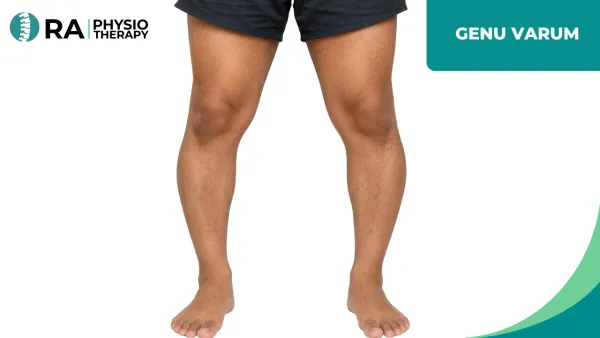
Genu Varum
Genu Varum Treatment & Physiotherapy for Bow LegsGenu varum, commonly known as bow legs, is a condition in which the legs curve outward at the knees while the feet and ankles remain together. This causes a gap between the knees and can affect posture, walking patterns, balance, and lower limb alignment. Genu varum is commonly seen in infants and young children during growth, but it may also occur in adolescents and adults due to bone deformities, arthritis, nutritional deficiencies, injury, or muscle imbalance. Physiotherapy helps improve posture, strengthen muscles, and reduce stress on the joints.
Genu varum, commonly known as bow legs, is a condition in which the legs curve outward at the knees while the feet and ankles remain together. This causes a gap between the knees and can affect posture, walking patterns, balance, and lower limb alignment. Genu varum is commonly seen in infants and young children during growth, but it may also occur in adolescents and adults due to bone deformities, arthritis, nutritional deficiencies, injury, or muscle imbalance. Physiotherapy helps improve posture, strengthen muscles, and reduce stress on the joints.
Common symptoms include:
- Outward bowing of the legs
- Gap between the knees while standing
- Difficulty walking or running
- Knee pain or discomfort
- Poor balance and posture
- Abnormal walking pattern
- Hip or ankle pain
- Muscle weakness in the legs
- Fatigue during physical activities
- Increased stress on the knee joints
Genu varum may occur due to:
- Growth and developmental variations
- Nutritional deficiencies such as vitamin D deficiency
- Bone deformities
- Blount’s disease
- Arthritis
- Previous fractures or injuries
- Muscle imbalance
- Genetic factors
- Poor lower limb alignment
Diagnosis includes physical examination and assessment of lower limb alignment and joint function. Tests may include:
- Postural assessment
- Gait analysis
- Range of motion examination
- Muscle strength assessment
- X-rays
- Lower limb alignment evaluation
Physiotherapy helps improve lower limb strength, posture, mobility, and functional movement patterns.
- Ice therapy to reduce pain and inflammation
- Heat therapy for muscle relaxation
- TENS therapy for pain management
- Ultrasound therapy
Manual therapy techniques help improve joint mobility, muscle flexibility, and lower limb movement.
Customized rehabilitation exercises help improve posture, balance, and lower limb stability.
- Quadriceps strengthening exercises
- Hip strengthening exercises
- Glute strengthening exercises
- Core stabilization exercises
- Ankle strengthening exercises
- Hamstring stretches
- Calf stretches
- Hip mobility exercises
- Lower limb flexibility exercises
Balance & Gait Training Balance exercises and gait training help improve walking patterns, coordination, and body alignment.
Patients are guided on proper standing posture, walking mechanics, and activity modifications to reduce stress on the joints.
- Experienced orthopedic physiotherapists
- Personalized rehabilitation programs
- One-on-one physiotherapy sessions
- Advanced exercise and posture correction techniques
- Focus on long-term joint health and mobility
- Evidence-based physiotherapy care
- Guidance for home exercises and prevention
If you or your child is experiencing bow legs, walking difficulties, or knee discomfort due to genu varum, our physiotherapy team can help improve alignment, mobility, and overall lower limb function. Book your physiotherapy consultation today for expert genu varum treatment and personalized rehabilitation care.
 Emergency No. : +91 93104 16308