


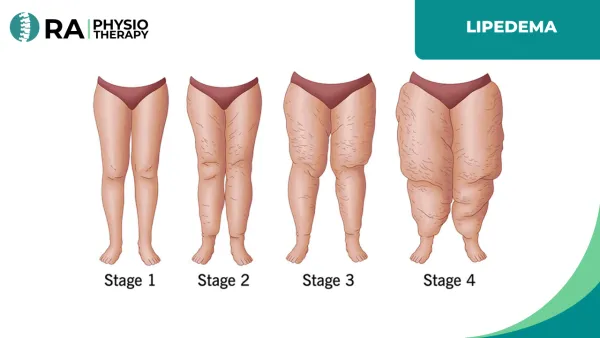
Lipedema
Lipedema Treatment & Physiotherapy for Swelling & Leg PainLipedema is a chronic condition involving abnormal fat buildup, commonly affecting the hips, thighs, buttocks, and legs. It primarily occurs in women and can cause pain, swelling, heaviness, tenderness, and reduced mobility. Unlike regular weight gain, lipedema fat is usually symmetrical and may not improve significantly with diet or exercise alone. The condition can gradually affect walking ability, posture, balance, and daily activities. Physiotherapy rehabilitation helps improve circulation, reduce discomfort, improve mobility, and support overall physical function and quality of life.
Lipedema is a chronic condition involving abnormal fat buildup, commonly affecting the hips, thighs, buttocks, and legs. It primarily occurs in women and can cause pain, swelling, heaviness, tenderness, and reduced mobility. Unlike regular weight gain, lipedema fat is usually symmetrical and may not improve significantly with diet or exercise alone. The condition can gradually affect walking ability, posture, balance, and daily activities. Physiotherapy rehabilitation helps improve circulation, reduce discomfort, improve mobility, and support overall physical function and quality of life.
Common symptoms include:
- Symmetrical swelling in the legs or hips
- Pain or tenderness in the affected areas
- Feeling of heaviness in the legs
- Easy bruising
- Tightness or discomfort in the limbs
- Reduced mobility
- Fatigue during walking or standing
- Swelling that worsens during the day
- Difficulty performing daily activities
Lipedema may occur due to:
- Genetic factors
- Hormonal changes
- Family history of lipedema
- Puberty or pregnancy-related hormonal changes
- Metabolic and connective tissue factors
Diagnosis includes physical examination and assessment of swelling, fat distribution, and functional mobility. Tests may include:
- Physical examination
- Limb measurement assessment
- Functional mobility evaluation
- Ultrasound imaging in selected cases
- Circulation assessment
- Postural and gait assessment
Physiotherapy rehabilitation helps improve circulation, reduce discomfort, maintain mobility, and support limb function. Manual Lymphatic Drainage (MLD) Gentle lymphatic drainage techniques help improve fluid movement and reduce swelling and heaviness. Compression Therapy Compression garments or bandaging may help support circulation and reduce swelling in the affected limbs.
Customized low-impact exercise programs help improve circulation, mobility, endurance, and muscle strength.
- Lower limb strengthening exercises
- Core stabilization exercises
- Functional strengthening exercises
- Postural strengthening exercises
- Lower limb flexibility exercises
- Hip mobility exercises
- Calf stretches
- Range of motion exercises
Balance & Functional Training Balance and functional movement exercises help improve walking ability, posture, and movement confidence. Gait & Endurance Training Walking and endurance exercises help improve mobility and reduce fatigue during daily activities.
Patients are guided on posture, movement strategies, healthy lifestyle habits, activity modification, and self-care techniques to manage symptoms effectively.
- Experienced physiotherapists for swelling and mobility rehabilitation
- Personalized rehabilitation programs
- One-on-one physiotherapy sessions
- Advanced lymphatic drainage techniques
- Focus on pain relief, circulation, and mobility improvement
- Evidence-based rehabilitation care
- Guidance for home exercises and long-term management
If you are experiencing leg heaviness, swelling, pain, or mobility difficulties due to lipedema, our physiotherapy team can help improve your comfort and functional mobility safely and effectively. Book your physiotherapy consultation today for expert lipedema treatment and personalized physiotherapy care.
 Emergency No. : +91 93104 16308