


Meralgia Paresthetica
MERALGIA PARESTHETICA TREATMENT & PHYSIOTHERAPY FOR LATERAL FEMORALCUTANEOUS NERVE ENTRAPMENT
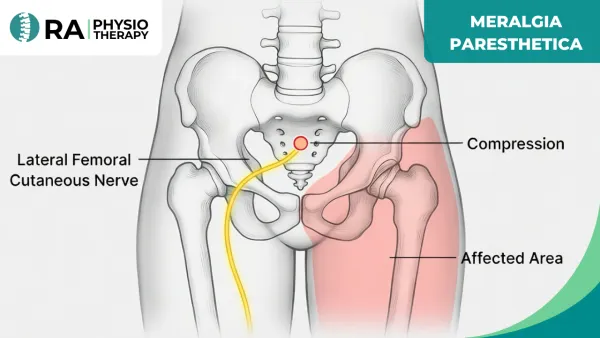
Meralgia paresthetica is a neurological condition caused by compression or entrapment of the lateral femoral cutaneous nerve (LFCN), which supplies sensation to the outer thigh. This condition leads to burning pain, tingling, numbness, or reduced sensation over the outer (lateral) aspect of the thigh, without affecting muscle strength. It is a purely sensory nerve disorder. It commonly occurs due to pressure at the inguinal ligament region where the nerve passes from the pelvis to the thigh.
Common symptoms include:
- Burning pain over outer thigh
- Tingling or “pins and needles” sensation
- Numbness in the lateral thigh
- Increased sensitivity to touch (hyperesthesia)
- Pain worsens with walking or standing
- Symptoms improve when sitting or lying down
- Tight clothing may increase discomfort
- No muscle weakness (pure sensory condition)
Meralgia paresthetica occurs due to compression of the lateral femoral cutaneous nerve. Common causes include:
- Tight clothing (belts, jeans, waistbands)
- Obesity or increased abdominal weight
- Pregnancy
- Prolonged standing or walking
- Trauma to the hip or pelvis
- Scar tissue after surgery
- Diabetes mellitus (neuropathy risk)
- Heavy exercise or sports activities
- Wearing heavy belts or tool belts
Acute Meralgia Paresthetica
- Sudden onset of symptoms
- Often due to tight clothing or trauma
- May resolve with posture correction and rest
Chronic Meralgia Paresthetica
- Long-term nerve compression
- Persistent burning or numbness
- Requires structured physiotherapy and lifestyle correction
- Detailed patient history
- Physical examination of sensory changes
- Tinel’s sign over inguinal ligament
- Nerve conduction studies (to confirm LFCN involvement)
- MRI or CT scan (to rule out lumbar spine or hip pathology)
- Blood tests if metabolic causes like diabetes are suspected
Physiotherapy focuses on reducing nerve compression, relieving pain, and improving mobility.
Improving pelvic and lumbar alignment to reduce nerve compression at the inguinal region. Nerve Gliding Exercises Gentle lateral femoral cutaneous nerve mobilization to reduce irritation and improve nerve movement.
- Hip flexor stretching
- Quadriceps stretching
- Iliopsoas and tensor fascia lata stretching
- Myofascial release of hip and thigh muscles
- Trigger point therapy for TFL and iliopsoas
- Reduces tension around nerve pathway
Helps reduce pain and improve nerve-related discomfort.
Guidance for reducing abdominal pressure on the nerve in overweight individuals.
- Avoid tight clothing
- Avoid prolonged standing
- Improve ergonomic habits during daily activities
- Core strengthening
- Hip stabilizer strengthening
- Gluteal muscle activation exercises
- Expert neuro and musculoskeletal physiotherapists
- Accurate diagnosis and nerve-based assessment
- Advanced pain relief techniques (manual therapy + electrotherapy)
- Personalized exercise and posture correction programs
- Focus on long-term nerve decompression
- Lifestyle and ergonomic correction guidance
- Preventive care to avoid recurrence
If you are experiencing burning pain or numbness in the outer thigh, early physiotherapy can help relieve nerve compression and restore comfort. Book your physiotherapy consultation today for expert Meralgia Paresthetica treatment and pain relief care.
 Emergency No. : +91 93104 16308