


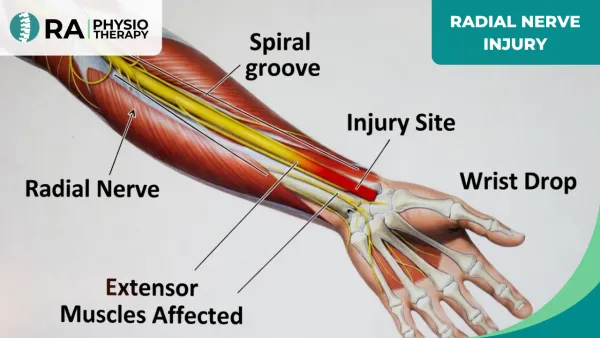
Radial Nerve Injury
Radial Nerve Injury Treatment & Physiotherapy RehabilitationRadial nerve injury occurs when the radial nerve is compressed, stretched, or damaged. The radial nerve controls movement and sensation in the arm, wrist, and hand. Injury to this nerve can affect the ability to straighten the wrist, fingers, and elbow, leading to weakness and difficulty performing daily activities. Radial nerve injuries may occur due to trauma, fractures, prolonged pressure on the nerve, sports injuries, or nerve compression. Early physiotherapy rehabilitation helps improve strength, restore movement, and support nerve recovery.
Radial nerve injury occurs when the radial nerve is compressed, stretched, or damaged. The radial nerve controls movement and sensation in the arm, wrist, and hand. Injury to this nerve can affect the ability to straighten the wrist, fingers, and elbow, leading to weakness and difficulty performing daily activities. Radial nerve injuries may occur due to trauma, fractures, prolonged pressure on the nerve, sports injuries, or nerve compression. Early physiotherapy rehabilitation helps improve strength, restore movement, and support nerve recovery.
Common symptoms include:
- Weakness in the wrist or hand
- Wrist drop
- Difficulty straightening the wrist or fingers
- Numbness or tingling in the arm, hand, or fingers
- Reduced grip strength
- Pain or burning sensations in the arm
- Difficulty lifting or holding objects
- Muscle weakness in the forearm
- Reduced hand coordination
Radial nerve injury may occur due to:
- Fracture of the humerus bone
- Direct trauma or injury to the arm
- Compression of the radial nerve
- Prolonged pressure on the arm during sleep
- Sports injuries
- Repetitive arm movements
- Surgical complications
- Nerve entrapment conditions
- Accidents or falls
Diagnosis includes physical examination and nerve assessment to evaluate muscle strength and nerve function. Tests may include:
- Nerve conduction studies
- Electromyography (EMG)
- MRI scan
- X-rays
- Muscle strength assessment
- Sensory examination
- Functional hand assessment
Physiotherapy rehabilitation helps improve nerve function, muscle strength, hand coordination, and overall arm mobility.
- TENS therapy for pain relief
- Heat therapy for muscle relaxation
- Ultrasound therapy
- Gentle soft tissue mobilization
- Electrical stimulation therapy
Manual therapy techniques help reduce stiffness, improve joint mobility, and maintain flexibility in the arm and wrist.
Customized rehabilitation exercises help restore strength, coordination, and functional hand movements.
- Wrist strengthening exercises
- Finger extension exercises
- Grip strengthening exercises
- Forearm strengthening exercises
- Shoulder and arm strengthening exercises
- Wrist mobility exercises
- Forearm stretches
- Finger stretching exercises
- Nerve gliding exercises
- Range of motion exercises
Patients are guided with hand coordination and functional activity training to improve daily movement and independence.
Wrist splints or supportive devices may be recommended to improve positioning and prevent muscle shortening during recovery.
- Experienced neuro and orthopedic physiotherapists
- Personalized rehabilitation programs
- One-on-one physiotherapy sessions
- Advanced nerve rehabilitation techniques
- Focus on restoring hand and arm function
- Evidence-based physiotherapy care
- Guidance for home exercises and recovery
If you are experiencing wrist weakness, hand numbness, or difficulty moving your arm or fingers due to radial nerve injury, our physiotherapy team can help support your recovery safely and effectively. Book your physiotherapy consultation today for expert radial nerve injury rehabilitation and personalized physiotherapy care.
 Emergency No. : +91 93104 16308