


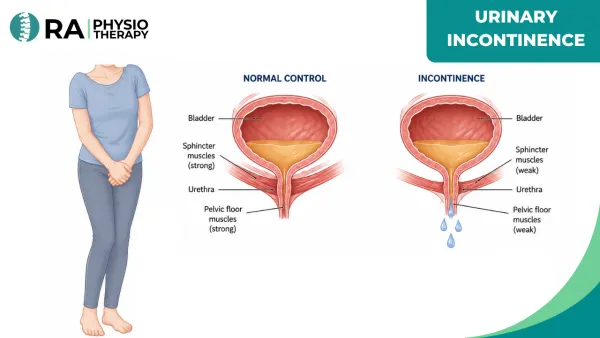
Urinary Incontinence
Urinary Incontinence Treatment & Pelvic Floor PhysiotherapyUrinary incontinence is a condition involving the loss of bladder control, leading to accidental leakage of urine. It can affect people of all ages and may occur due to weakened pelvic floor muscles, nerve problems, pregnancy, childbirth, aging, surgery, or certain medical conditions. Urinary incontinence can affect daily activities, confidence, sleep, and quality of life. Pelvic floor physiotherapy helps strengthen the pelvic muscles, improve bladder control, and restore normal pelvic function safely and effectively.
Urinary incontinence is a condition involving the loss of bladder control, leading to accidental leakage of urine. It can affect people of all ages and may occur due to weakened pelvic floor muscles, nerve problems, pregnancy, childbirth, aging, surgery, or certain medical conditions. Urinary incontinence can affect daily activities, confidence, sleep, and quality of life. Pelvic floor physiotherapy helps strengthen the pelvic muscles, improve bladder control, and restore normal pelvic function safely and effectively.
Common symptoms include:
- Accidental leakage of urine
- Frequent urge to urinate
- Difficulty controlling urine flow
- Leakage while coughing, sneezing, or laughing
- Urine leakage during exercise or lifting
- Sudden strong urge to urinate
- Frequent nighttime urination
- Pelvic floor weakness
- Discomfort during daily activities
Urinary incontinence may occur due to:
- Weak pelvic floor muscles
- Pregnancy and childbirth
- Aging-related muscle weakness
- Menopause
- Prostate surgery or pelvic surgery
- Nerve damage
- Obesity and excess body weight
- Chronic coughing
- Urinary tract infections
- Neurological conditions
Diagnosis includes physical examination and pelvic floor assessment to identify the cause and severity of bladder control problems. Tests may include:
- Pelvic floor assessment
- Bladder diary evaluation
- Urine tests
- Ultrasound imaging
- Urodynamic testing
- Neurological examination
- Muscle strength assessment
Pelvic floor physiotherapy helps improve bladder control, strengthen muscles, and restore pelvic floor coordination. Pelvic Floor Muscle Training Pelvic floor exercises help strengthen the muscles responsible for bladder control and improve muscle coordination.
Biofeedback training helps patients learn how to properly activate and strengthen pelvic floor muscles.
Electrical stimulation may help improve muscle activation and pelvic floor function in weakened muscles.
Customized rehabilitation exercises help improve pelvic stability, posture, and muscle control.
- Pelvic floor strengthening exercises
- Core stabilization exercises
- Lower abdominal strengthening exercises
- Hip and pelvic stability exercises
- Pelvic mobility exercises
- Lower back stretches
- Hip flexibility exercises
- Relaxation exercises for pelvic muscles
Bladder Retraining Patients are guided with bladder training techniques, toileting habits, and urge control strategies to improve bladder function.
Education is provided on posture correction, fluid intake, weight management, and lifestyle modifications to reduce symptoms and improve quality of life.
- Experienced pelvic floor physiotherapists
- Personalized rehabilitation programs
- Private and confidential treatment sessions
- One-on-one physiotherapy care
- Advanced pelvic floor rehabilitation techniques
- Evidence-based treatment approaches
- Guidance for home exercises and bladder management
If you are experiencing bladder leakage, pelvic floor weakness, or difficulty controlling urination, our physiotherapy team can help improve your bladder control and confidence. Book your physiotherapy consultation today for expert urinary incontinence treatment and personalized pelvic floor rehabilitation care.
 Emergency No. : +91 93104 16308