


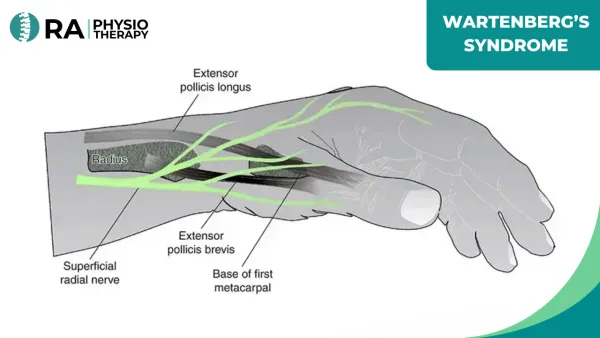
Wartenberg’s Syndrome
Wartenberg’s Syndrome Treatment & Physiotherapy for Wrist & Hand Nerve PainWartenberg’s Syndrome, also known as superficial radial nerve entrapment, is a condition caused by irritation or compression of the superficial branch of the radial nerve near the wrist and thumb area. This condition commonly leads to pain, burning sensations, numbness, and tingling on the back of the hand and thumb. Wartenberg’s Syndrome may develop due to repetitive wrist movements, tight wristbands or watches, trauma, overuse injuries, or prolonged pressure on the nerve. Physiotherapy helps reduce nerve irritation, relieve pain, and restore normal hand and wrist function.
Wartenberg’s Syndrome, also known as superficial radial nerve entrapment, is a condition caused by irritation or compression of the superficial branch of the radial nerve near the wrist and thumb area. This condition commonly leads to pain, burning sensations, numbness, and tingling on the back of the hand and thumb. Wartenberg’s Syndrome may develop due to repetitive wrist movements, tight wristbands or watches, trauma, overuse injuries, or prolonged pressure on the nerve. Physiotherapy helps reduce nerve irritation, relieve pain, and restore normal hand and wrist function.
Common symptoms include:
- Burning pain near the thumb and wrist
- Numbness or tingling on the back of the hand
- Increased sensitivity around the thumb area
- Pain during wrist movements
- Discomfort while gripping or lifting objects
- Tingling sensations with repetitive hand use
- Pain aggravated by tight wristbands or watches
- Reduced hand comfort during daily activities
Wartenberg’s Syndrome may occur due to:
- Repetitive wrist and hand movements
- Compression of the superficial radial nerve
- Tight watches, bracelets, or wristbands
- Overuse injuries
- Sports-related wrist strain
- Direct trauma to the wrist or forearm
- Scar tissue around the nerve
- Prolonged pressure on the wrist
Diagnosis includes physical examination and nerve assessment to identify radial nerve irritation. Tests may include:
- Clinical nerve examination
- Sensory assessment
- Wrist and thumb movement assessment
- Tinel’s sign testing
- Nerve conduction studies
- Ultrasound imaging
- MRI scan in selected cases
Physiotherapy helps reduce nerve compression, improve mobility, and restore comfortable wrist and hand function.
- Ice therapy to reduce inflammation
- TENS therapy for pain management
- Ultrasound therapy
- Soft tissue release techniques
- Gentle nerve desensitization therapy
Manual therapy techniques help reduce muscle tightness, improve tissue mobility, and decrease pressure on the radial nerve.
Customized rehabilitation exercises help improve wrist flexibility, nerve mobility, and hand function.
- Wrist strengthening exercises
- Grip strengthening exercises
- Forearm strengthening exercises
- Thumb stabilization exercises
- Wrist mobility exercises
- Forearm stretches
- Thumb flexibility exercises
- Radial nerve gliding exercises
- Range of motion exercises
Patients are guided on avoiding repetitive strain, reducing nerve irritation, and modifying daily activities to support recovery.
Education is provided on proper wrist positioning, ergonomic adjustments, and hand mechanics during work and daily activities.
- Experienced orthopedic and neuro physiotherapists
- Personalized rehabilitation programs
- One-on-one physiotherapy sessions
- Advanced nerve rehabilitation techniques
- Focus on pain relief and functional recovery
- Evidence-based physiotherapy care
- Guidance for home exercises and prevention
If you are experiencing wrist pain, thumb numbness, or burning sensations in the hand due to Wartenberg’s Syndrome, our physiotherapy team can help you recover safely and effectively. Book your physiotherapy consultation today for expert Wartenberg’s Syndrome treatment and personalized rehabilitation care.
 Emergency No. : +91 93104 16308