


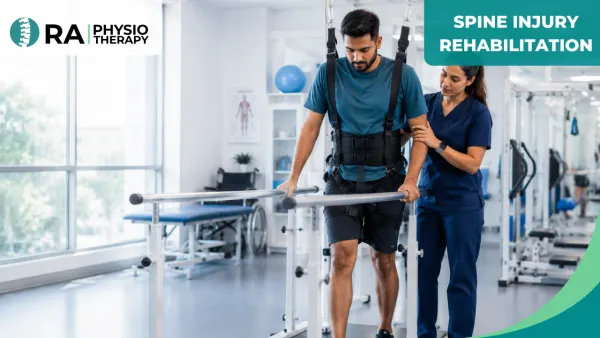
Spine Injury Rehabilitation
Specialized Physiotherapy for Spinal Cord Injury Recovery & Functional IndependenceSpinal Injury Rehabilitation is a comprehensive physiotherapy program designed to help individuals recover function, improve mobility, regain independence, and enhance quality of life after a spinal cord injury (SCI). Spinal cord injuries can affect movement, sensation, balance, breathing, bladder and bowel control, posture, and daily functional activities. Rehabilitation focuses on maximizing recovery, preventing complications, and helping patients adapt safely to daily life. Physiotherapy plays a vital role in Spinal Injury Rehabilitation by improving strength, mobility, coordination, respiratory function, posture, and overall functional independence.
Spinal Cord Injury (SCI) occurs when trauma, compression, or disease damages the spinal cord and interrupts communication between the brain and body.
SCI can affect: Muscle strength and movement, Sensation and coordination, Balance and posture, Breathing function, Bladder and bowel control, Blood pressure regulation, Temperature control, and Functional independence.
Recovery after spinal cord injury depends on: Level of spinal injury, Severity of damage, Complete or incomplete injury, and Early rehabilitation intervention.
Types of Spinal Cord Injuries:
1. Complete Spinal Cord Injury: A complete spinal cord injury causes total loss of movement and sensation below the level of injury. Effects May Include: Paralysis below the injury site, Loss of motor control, Loss of sensory function, Reduced functional independence. For example: Lumbar injury may affect the legs and lower body; Cervical injury may affect both upper and lower limbs.
2. Incomplete Spinal Cord Injury: An incomplete spinal cord injury occurs when some nerve signals can still pass through the injured spinal cord. Symptoms May Vary: Partial muscle weakness, Reduced sensation, Impaired coordination, Difficulty walking, Variable motor control. The extent of recovery differs from person to person.
The primary goals of rehabilitation are:
- Maximize movement and sensory recovery
- Improve strength and mobility
- Prevent secondary complications
- Improve respiratory and cardiovascular function
- Enhance balance and coordination
- Improve independence in daily activities
- Improve posture and body mechanics
- Promote functional recovery
- Improve quality of life and confidence
Rehabilitation begins as early as possible after the injury and continues through different recovery phases. The physiotherapist follows a structured rehabilitation approach:
1. Detailed Assessment: The physiotherapist evaluates: Muscle strength, Joint mobility, Balance and coordination, Respiratory function, Sensory changes, Functional abilities, Pain levels, Posture and mobility limitations.
2. Goal Setting: Personalized rehabilitation goals are created based on: Injury level, Functional limitations, Recovery potential, Daily activity requirements.
3. Customized Treatment Plan: The physiotherapy program is designed to improve: Strength, Movement control, Mobility, Breathing efficiency, Functional independence.
4. Progress Monitoring: Regular assessments help monitor recovery and adjust rehabilitation goals accordingly.
Acute Phase: Focuses on: Medical stabilization, Pain management, Preventing complications, Respiratory care, Early mobility training.
Sub-Acute Rehabilitation Phase: Focuses on: Strengthening exercises, Balance and coordination training, Functional mobility, Wheelchair or assistive device training, Neuro-rehabilitation exercises.
Chronic Rehabilitation Phase: Focuses on: Long-term mobility, Functional independence, Community reintegration, Lifestyle adaptation, Ongoing fitness and conditioning.
Pain Management: Physiotherapy helps: Reduce pain and stiffness, Improve joint mobility, Relax tight muscles, Improve posture and movement mechanics.
Movement Awareness & Posture Training: Patients learn: Safe movement strategies, Proper posture, Pressure relief techniques, Efficient body mechanics.
Strength & Functional Recovery: Exercises help improve: Muscle strength, Functional movement, Stability and endurance, Transfer abilities.
Balance & Coordination Training: Rehabilitation improves: Standing balance, Sitting balance, Walking ability, Functional coordination.
Cardiovascular Fitness: Aerobic conditioning helps: Improve circulation, Maintain heart health, Improve endurance, Reduce fatigue.
Respiratory Rehabilitation: Especially important for cervical and thoracic injuries. Therapy may include: Breathing exercises, Respiratory muscle strengthening, Chest physiotherapy, Airway clearance techniques.
Treatment programs may include:
- Strengthening Exercises
- Stretching & Flexibility Training
- Balance & Coordination Exercises
- Functional Mobility Training
- Gait Training
- Respiratory Exercises
- Postural Training
- Transfer Training
- Cardiovascular Conditioning
- Massage Therapy
- Thermotherapy
- TENS Therapy
- Functional Electrical Stimulation (FES)
- Acupuncture
- Wheelchair Skills Training
Patients may be trained to use:
- Wheelchairs
- Walkers
- Crutches
- Orthotic Supports
- Standing Frames
- Mobility Aids
Functional training focuses on:
- Transfers
- Bed mobility
- Dressing and grooming
- Daily living activities
- Safe movement strategies
Spinal Rehabilitation is beneficial for:
- Traumatic Spinal Cord Injury
- Non-Traumatic Spinal Cord Injury
- Post-Spinal Surgery Rehabilitation
- Spinal Disorders
- Neuromuscular Conditions
- Central Nervous System Disorders
- Dual Brain & Spinal Injuries
- Paralysis & Mobility Disorders
Spinal Injury Rehabilitation is suitable for:
- Patients recovering from spinal cord injury
- Individuals with paralysis or weakness
- Patients after spinal surgery
- Individuals with mobility impairments
- Patients with neuromuscular disorders
- People requiring wheelchair or gait training
- Individuals with respiratory weakness due to spinal injury
Anyone experiencing movement limitations, weakness, or functional difficulties after spinal injury can benefit from rehabilitation physiotherapy.
Session Duration: Typically 45-60 minutes
Frequency: Usually 3-5 sessions per week depending on recovery stage and condition severity.
Rehabilitation Duration: Recovery may continue for several months to years depending on injury severity and rehabilitation goals.
- Experienced Neuro & Spinal Rehabilitation Physiotherapists
- Personalized Recovery Programs
- Advanced Rehabilitation Techniques
- Functional Mobility Training
- Respiratory Rehabilitation Expertise
- Evidence-Based Physiotherapy Care
- One-on-One Patient Attention
- Long-Term Functional Recovery Focus
Recover strength, improve mobility, and regain independence with expert Spinal Injury Rehabilitation. Book your Spinal Rehabilitation session today and receive personalized physiotherapy care designed to improve movement, restore function, enhance recovery, and improve overall quality of life.
 Emergency No. : +91 93104 16308