


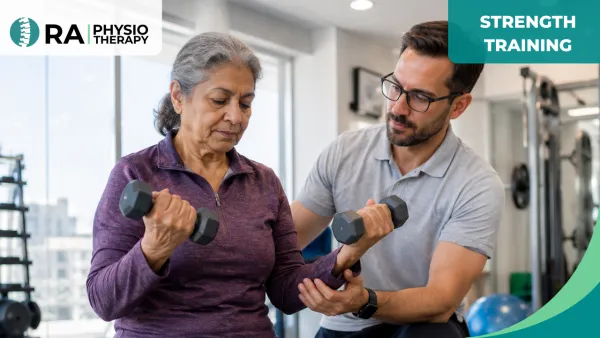
Strength Training
Build Strength, Improve Performance & Prevent InjuriesStrength Training is a specialized physiotherapy and exercise program designed to improve muscle strength, endurance, stability, flexibility, and overall physical performance. Strong muscles help support joints, improve posture, enhance mobility, and reduce the risk of injuries during daily activities, sports, and rehabilitation. Strength Training is beneficial for rehabilitation after injury or surgery, sports performance, posture correction, chronic pain management, and overall fitness improvement.
Strength Training is the process of improving muscle strength by performing controlled exercises against resistance.
The resistance may come from:
- Body Weight
- Resistance Bands
- Free Weights
- Machines
- Water Resistance
- Functional Movements
Strength Training helps:
- Improve muscle strength and endurance
- Increase joint stability
- Improve posture and balance
- Enhance physical performance
- Improve flexibility and mobility
- Prevent injuries
- Reduce muscle weakness
- Improve daily functional activities
- Support faster rehabilitation and recovery
Programs are customized according to individual goals, fitness levels, injuries, and medical conditions.
- Builds muscle strength and endurance
- Improves posture and body mechanics
- Enhances balance and coordination
- Reduces risk of injuries
- Improves joint stability
- Supports healthy bones and joints
- Increases flexibility and mobility
- Improves athletic performance
- Helps manage chronic pain conditions
- Enhances overall fitness and quality of life
A physiotherapist first performs a detailed assessment to evaluate:
- Muscle strength
- Flexibility
- Balance and posture
- Mobility and movement control
- Physical limitations and goals
Based on the assessment, a personalized strengthening program is created. The program may include:
- Therapeutic Exercises
- Resistance Training
- Functional Strength Training
- Core Strengthening
- Stability Exercises
- Balance Training
- Sports Conditioning
- Endurance Training
- Postural Correction Exercises
Exercises are gradually progressed according to recovery and performance levels.
1. Isometric Exercises: Muscles contract without joint movement. Best for: Early rehabilitation, Pain management, Joint stabilization, Post-injury strengthening.
2. Concentric Exercises: Muscles shorten while generating force. Examples: Lifting weights, Climbing stairs, Squats.
3. Eccentric Exercises: Muscles lengthen while under tension. Best for: Tendon rehabilitation, Muscle control, Injury prevention, Advanced strengthening.
Strength Training may involve:
- Bodyweight Exercises
- Resistance Band Exercises
- Free Weights & Dumbbells
- Functional Training
- Suspension Training
- Hydrotherapy Exercises
- Machine-Based Strength Training
- Core Stability Training
Common strengthening equipment includes:
- Dumbbells & Free Weights
- Resistance Bands
- Weight Machines
- Kettlebells
- Stability Balls
- Hand Grip Exercisers
- Static Cycles
- Balance Boards
- Bodyweight Training Equipment
Many effective strengthening exercises can also be performed without equipment.
Strength Training plays an important role in physiotherapy rehabilitation by helping patients:
- Recover after injury
- Restore muscle strength after surgery
- Improve joint stability
- Correct movement dysfunction
- Improve walking and balance
- Prevent re-injury
- Improve functional independence
Strength Training is beneficial for:
- Muscle Weakness
- Sports Injuries
- Back & Neck Pain
- Postural Problems
- Arthritis
- Osteoporosis
- Joint Instability
- Post-Surgical Rehabilitation
- Ligament Injuries
- Tendon Injuries
- Neurological Conditions
- Stroke Rehabilitation
- Parkinson's Disease
- Geriatric Weakness
- Pediatric Developmental Delays
- Pre & Post-Natal Weakness
- Chronic Pain Conditions
Strength Training helps athletes:
- Improve speed and power
- Enhance endurance
- Improve agility and stability
- Reduce injury risk
- Improve muscle recovery
- Enhance overall athletic performance
Sport-specific strengthening programs are customized according to the athlete's activity and physical demands.
Correct exercise technique is essential for:
- Injury prevention
- Better muscle activation
- Safe progression
- Improved exercise efficiency
- Better rehabilitation outcomes
Physiotherapists ensure exercises are performed safely with proper posture, movement control, and resistance progression.
Recovery is a vital part of Strength Training. Proper recovery helps:
- Prevent overuse injuries
- Reduce muscle soreness
- Improve performance
- Support muscle repair and growth
Recovery strategies may include:
- Stretching
- Mobility Exercises
- Massage Therapy
- Cryotherapy & Heat Therapy
- Adequate Rest & Sleep
- Active Recovery Exercises
Strength Training is beneficial for:
- Athletes & Sports Professionals
- Individuals Recovering from Injury
- Post-Surgical Patients
- Elderly Individuals with Weakness
- Office Workers with Poor Posture
- Individuals with Chronic Pain
- Patients with Neurological Conditions
- Fitness Enthusiasts
- Children with Developmental Delays
Session Duration: Typically 45-60 minutes
Frequency: Usually 2-5 sessions per week depending on goals and fitness levels.
Program Duration: Customized according to rehabilitation, fitness, or performance goals.
- Experienced Physiotherapists
- Personalized Strength Programs
- Evidence-Based Exercise Therapy
- Sports Rehabilitation Expertise
- Injury Prevention Focus
- Safe & Progressive Training Methods
- One-on-One Attention
- Modern Rehabilitation Equipment
Improve your strength, mobility, endurance, and overall physical performance with expert physiotherapy-guided Strength Training.
Book your Strength Training session today for personalized rehabilitation, fitness improvement, injury prevention, and long-term physical wellness.
 Emergency No. : +91 93104 16308