


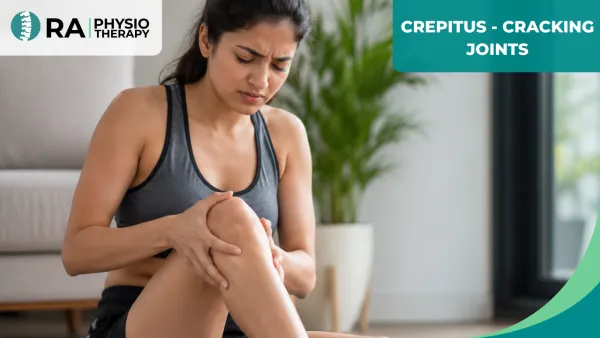
Crepitus - Cracking Joints
Professional Care for Joint Noises, Clicking, and CrepitusCrepitus, commonly known as cracking or popping joints, is a symptom in which grinding, cracking, clicking, or popping sounds are heard during joint movement.
Crepitus, commonly known as cracking or popping joints, is a symptom in which grinding, cracking, clicking, or popping sounds are heard during joint movement. These sounds may occur in the knees, shoulders, neck, fingers, hips, ankles, or other joints of the body.
In many cases, joint cracking is harmless and occurs due to the movement of air bubbles within the joint fluid. However, persistent crepitus associated with pain, swelling, stiffness, or reduced movement may indicate joint wear, cartilage damage, arthritis, muscle imbalance, or underlying musculoskeletal conditions. Crepitus can affect people of all age groups and is commonly experienced during walking, bending, climbing stairs, exercising, or moving joints after long periods of rest.
Crepitus may occur due to several joint, muscle, or cartilage-related conditions. Common causes include:
- Air bubbles moving inside joints
- Joint overuse or repetitive movements
- Cartilage wear and tear
- Osteoarthritis
- Muscle tightness or imbalance
- Ligament or tendon movement over bones
- Joint stiffness
- Previous joint injuries
- Weak surrounding muscles
- Poor posture or body mechanics
- Aging-related joint degeneration
- Inflammation within the joints
- Reduced joint lubrication
In some cases, painful crepitus may be associated with cartilage damage, knee disorders, or joint instability.
Risk Factors
- Aging
- Osteoarthritis
- Sedentary lifestyle
- Poor posture
- Obesity or excess body weight
- Weak muscles around joints
- Previous joint injuries
- Repetitive physical activities
- Sports-related stress on joints
- Lack of flexibility and mobility exercises
Prevention Tips
- Maintain Joint Flexibility: Regular stretching and mobility exercises help improve joint movement.
- Strengthen Supporting Muscles: Strong muscles provide better joint stability and reduce stress on joints.
- Maintain Healthy Body Weight: Reducing excess weight helps decrease pressure on weight-bearing joints.
- Stay Physically Active: Regular exercise improves joint lubrication and circulation.
- Avoid Repetitive Joint Stress: Take breaks during repetitive activities and avoid overloading joints.
- Follow Proper Posture: Correct posture and movement patterns help reduce unnecessary joint strain.
Physiotherapy plays an important role in reducing joint stress, improving mobility, strengthening muscles, and managing painful crepitus. A physiotherapist evaluates joint movement, posture, muscle strength, flexibility, and underlying biomechanical issues before creating a personalized treatment plan.
Physiotherapy treatments may include:
- Joint Mobilization: Hands-on techniques help improve joint movement and reduce stiffness.
- Strengthening Exercises: Helps improve muscle support around joints and enhances stability.
- Stretching Exercises: Improves flexibility and reduces muscle tightness affecting joint movement.
- Range Of Motion Exercises: Helps maintain healthy joint mobility and flexibility.
- Posture Correction: Improves body mechanics and reduces unnecessary pressure on joints.
- Balance & Functional Training: Enhances joint control and movement efficiency during daily activities.
- Electrotherapy: TENS or ultrasound therapy may help reduce pain and inflammation.
- Soft Tissue Mobilization: Helps release muscle tension surrounding affected joints.
The goal of physiotherapy is to improve joint function, reduce discomfort, enhance mobility, and prevent further joint degeneration.
Consult a healthcare professional or physiotherapist if:
- Joint cracking is associated with pain
- Swelling or stiffness develops
- Joint movement becomes difficult
- Cracking sounds increase over time
- Joint instability or weakness occurs
- Symptoms interfere with walking or daily activities
- There is a history of joint injury
- Joint locking or restricted movement develops
Early assessment and treatment can help prevent long-term joint complications.
 Emergency No. : +91 93104 16308