


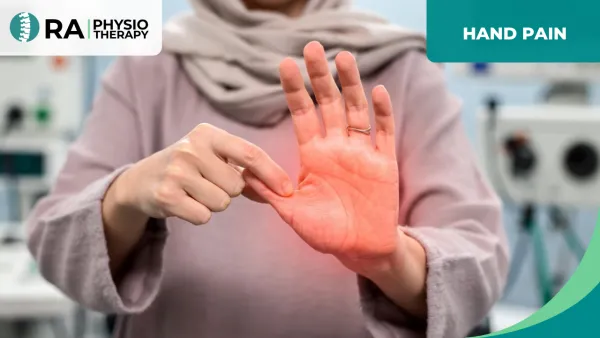
Hand Pain
Physiotherapy and Rehabilitation for Hand Arthritis, Pain, and Power GripHand pain is a common symptom that causes discomfort, stiffness, weakness, or pain in the fingers, palm, wrist, or hand joints.
Hand pain is a common symptom that causes discomfort, stiffness, weakness, or pain in the fingers, palm, wrist, or hand joints. It can affect gripping, writing, typing, lifting objects, and performing routine daily activities.
The hands are made up of multiple small bones, joints, muscles, tendons, ligaments, and nerves that work together to provide movement and function. Hand pain can develop suddenly after injury or gradually due to repetitive strain, arthritis, nerve compression, tendon inflammation, or overuse. In some cases, hand pain may also be associated with swelling, numbness, tingling, stiffness, reduced grip strength, or difficulty moving the fingers.
Hand pain can occur due to several muscular, tendon, ligament, and joint-related conditions. Common causes include:
- Arthritis
- Carpal Tunnel Syndrome
- Tendonitis
- Repetitive strain injuries
- Muscle overuse
- Ligament sprains
- Joint stiffness
- Sports injuries
- Nerve compression
- Trigger finger
- Poor hand posture
- Fractures or trauma
- Occupational overuse injuries
- Weak hand and forearm muscles
- Inflammation of hand joints
In some cases, hand pain may develop due to prolonged computer use, repetitive gripping activities, or poor ergonomic habits.
Risk Factors
- Repetitive hand movements
- Long hours of typing or computer work
- Poor workstation ergonomics
- Sports involving gripping activities
- Arthritis
- Weak hand and forearm muscles
- Previous hand injuries
- Poor posture
- Heavy manual work
- Lack of flexibility exercises
Prevention Tips
- Maintain Proper Hand & Wrist Posture: Correct positioning helps reduce stress on the hands and wrists.
- Take Frequent Breaks: Avoid prolonged repetitive hand movements without rest.
- Strengthen Hand Muscles: Regular exercises improve grip strength and joint stability.
- Stretch Regularly: Stretching exercises improve flexibility and reduce stiffness.
- Use Ergonomic Equipment: Proper workstation setup helps reduce strain on the hands.
- Avoid Overuse Injuries: Gradually increase activity levels and avoid excessive repetitive stress.
Physiotherapy is highly effective in reducing hand pain, improving mobility, restoring grip strength, and enhancing hand function. A physiotherapist evaluates hand movement, grip strength, posture, flexibility, nerve involvement, and functional limitations before creating a personalized rehabilitation plan.
Physiotherapy treatments may include:
- Stretching Exercises: Helps improve flexibility and reduce muscle tightness.
- Strengthening Exercises: Improves hand stability and grip strength.
- Manual Therapy: Hands-on techniques help improve joint mobility and reduce stiffness.
- Nerve Mobilization: Helps reduce nerve irritation and improve hand function.
- Grip Strength Training: Improves hand coordination and functional ability.
- Electrotherapy: TENS and ultrasound therapy may help reduce pain and inflammation.
- Soft Tissue Mobilization: Helps improve circulation and reduce muscle tension.
- Ergonomic & Posture Training: Improves body mechanics and prevents recurring strain.
The goal of physiotherapy is to relieve pain, restore hand movement, improve strength, and support long-term hand function.
Consult a healthcare professional or physiotherapist if:
- Hand pain persists for several days
- Gripping or lifting becomes difficult
- Numbness or tingling develops
- Swelling or stiffness increases
- Weakness develops in the hand or fingers
- Pain interferes with daily activities
- Symptoms worsen during movement
- Pain develops after injury or trauma
Early physiotherapy treatment can help prevent chronic hand problems and improve recovery.
 Emergency No. : +91 93104 16308