


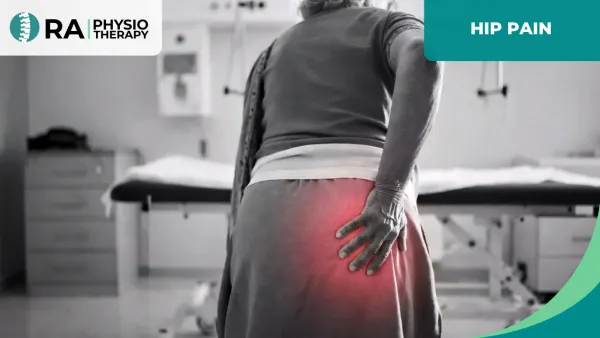
Hip Pain
Professional Physiotherapy and Rehabilitation for Hip Joint & Groin PainHip pain is a common musculoskeletal symptom that causes discomfort, stiffness, or pain in and around the hip joint.
Hip pain is a common musculoskeletal symptom that causes discomfort, stiffness, or pain in and around the hip joint. The pain may affect the groin, outer hip, buttocks, or upper thigh and can make walking, standing, sitting, climbing stairs, or daily activities difficult.
The hip joint plays an important role in supporting body weight and maintaining balance and movement. Hip pain can develop suddenly after injury or gradually due to overuse, muscle weakness, arthritis, poor posture, or joint degeneration. In some cases, hip pain may also radiate to the lower back, thigh, or knee and may be associated with reduced flexibility, joint stiffness, limping, or difficulty moving the leg comfortably.
Hip pain can occur due to several muscular, joint, tendon, ligament, and posture-related conditions. Common causes include:
- Osteoarthritis of the hip
- Muscle strain or overuse
- Hip bursitis
- Tendonitis
- Joint stiffness
- Sports injuries
- Labral injuries
- Sciatica
- Poor posture or gait abnormalities
- Weak hip and core muscles
- Repetitive stress injuries
- Hip impingement
- Lower back problems affecting the hip
- Age-related joint degeneration
- Obesity or excess body weight
In some cases, hip pain may develop due to reduced flexibility or improper movement mechanics.
Risk Factors
- Aging
- Obesity
- Sedentary lifestyle
- Weak hip and core muscles
- Poor posture
- Repetitive physical activities
- Sports involving running or jumping
- Previous hip injuries
- Long sitting hours
- Reduced flexibility and mobility
Prevention Tips
- Maintain Healthy Body Weight: Reducing excess body weight decreases pressure on the hip joints.
- Strengthen Hip & Core Muscles: Strong muscles improve joint stability and reduce stress on the hips.
- Stay Physically Active: Regular exercise helps maintain hip mobility and flexibility.
- Stretch Regularly: Stretching exercises help reduce muscle tightness and stiffness.
- Maintain Proper Posture: Correct posture improves movement mechanics and joint alignment.
- Avoid Overuse Injuries: Take breaks during repetitive activities and avoid excessive strain on the hip joint.
Physiotherapy is highly effective in reducing hip pain, improving mobility, restoring strength, and enhancing joint function. A physiotherapist evaluates posture, walking pattern, joint mobility, muscle strength, flexibility, and functional limitations before creating a personalized rehabilitation program.
Physiotherapy treatments may include:
- Strengthening Exercises: Helps improve muscle support around the hip joint.
- Stretching Exercises: Improves flexibility and reduces muscle tightness.
- Range Of Motion Exercises: Restores comfortable hip movement and mobility.
- Manual Therapy: Hands-on techniques help improve joint mobility and reduce stiffness.
- Gait Training: Corrects walking posture and movement abnormalities.
- Balance & Stability Training: Improves coordination and joint control.
- Electrotherapy: TENS and ultrasound therapy may help reduce pain and inflammation.
- Posture Correction: Improves body mechanics and reduces stress on the hips and lower back.
The goal of physiotherapy is to relieve pain, improve movement, restore strength, and prevent future hip problems.
Consult a healthcare professional or physiotherapist if:
- Hip pain persists for several days
- Walking or standing becomes difficult
- Joint stiffness or limping develops
- Pain radiates to the thigh or lower back
- Movement becomes restricted
- Pain interferes with sleep or daily activities
- Symptoms worsen during activity
Early physiotherapy treatment can help prevent chronic hip problems and improve recovery.
 Emergency No. : +91 93104 16308